
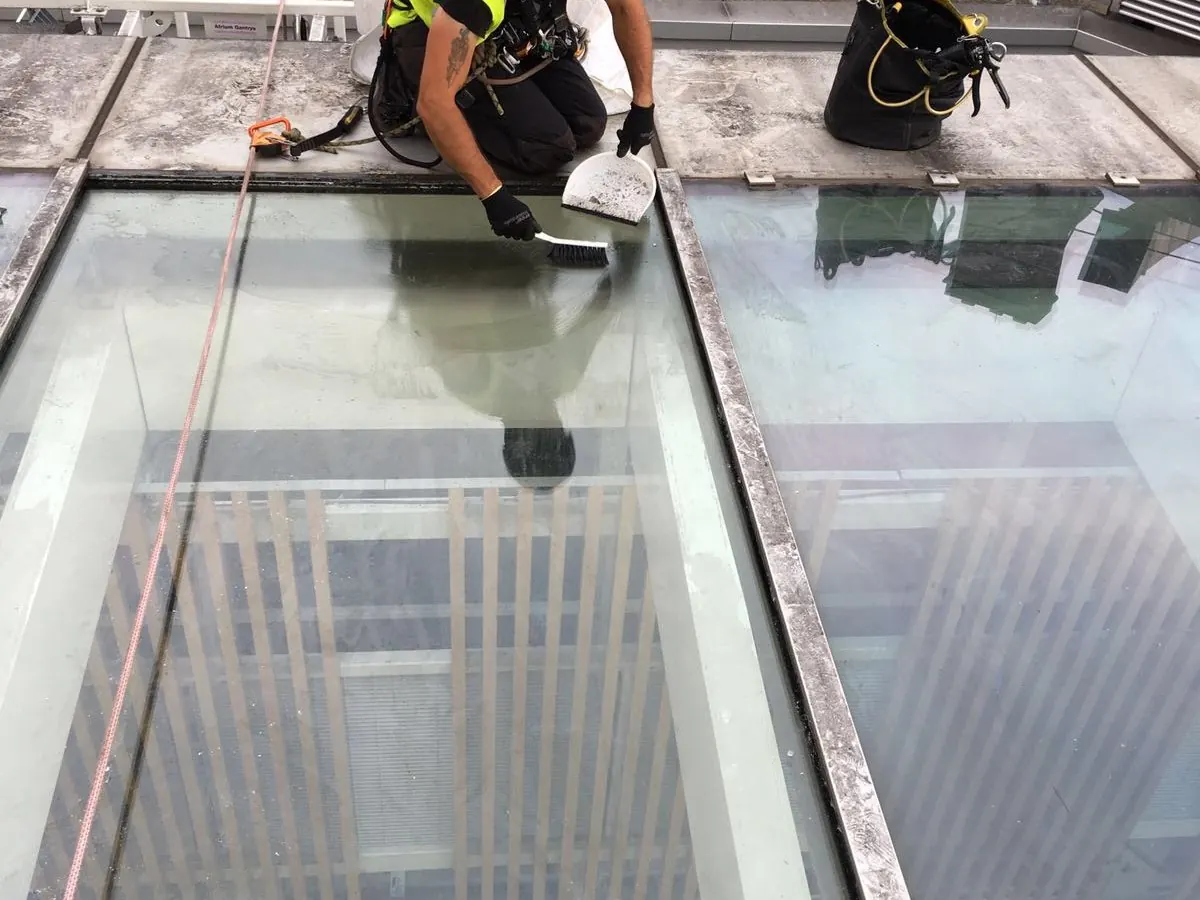
Glass Leak on an Occupied Commercial Building — London
Water is already inside an occupied commercial building — a trading floor, a hotel or a restaurant — and it is coming through the glass. London first. The stain is not the entry point.
ARRT Group is SafeContractor accredited and can offer an insurance-backed guarantee of up to 20 years on the work.
The brief is an occupied commercial building with water coming in through the glazing: a curtain wall, an atrium, hotel or restaurant glass, or a live trading floor in London. We look at the occupied building first and make the opening safe where water is already inside. We do not reseal the elevation and hope.
Where that leak needs to be made safe and permanently closed on the same instruction, see glass leak repairs.
The method sits under that brief, not in front of it. We review the system and its drainage design, inspect from outside at close quarters, then run staged spray and flood testing to isolate the entry path — joint by joint, zone by zone — until the defect is proven rather than assumed. Thermal imaging and moisture mapping are part of that same test sequence.
You then get a report that says exactly where water is getting in, why, and what the repair is. We carry out the remedial work and re-test the same area to demonstrate the leak has actually been resolved.
On roofs and elevations that are awkward to walk, an aerial condition survey can map suspect zones before we isolate the entry path at close quarters.
Where the leak is through a glass roof, atrium or rooflight, the repair path is on glass roof leak repair. Where it is through curtain wall gaskets, see curtain wall gasket replacement.
What we deliver
- Staged spray and flood water testing to industry practice
- Drainage and pressure-equalisation investigation
- Thermal imaging and moisture mapping
- Targeted gasket, seal and joint remediation
- Cill, transom, mullion junction and penetration repairs
- Post-repair verification testing and sign-off report
How the work is done
| Typical causes traced | Failed gaskets, blocked drainage, split seals, movement joints, poor interfaces |
|---|---|
| Test methods | Hose and spray rack testing, flood testing, smoke and thermal survey |
| Access methods | Rope access, MEWP, internal access with protection |
| Reporting | Annotated photographic report, cause analysis, costed remedial options |
| Verification | Repeat test after repair, before final account |
Questions we get asked
How long does leak testing take?
A single window or joint can be isolated in a few hours. A large elevation with several suspected paths is usually a one to three day exercise, and we agree a testing sequence with you in advance.
Can you work with our insurer or building surveyor?
Yes. Our reports are written to be used as evidence, and we are comfortable working alongside surveyors, loss adjusters and facade consultants.
Often needed alongside this
High-Level Glass Replacement
Failed, cracked, blown or vandalised units replaced at height — from single panes to full elevations, with access designed around your building.
View service 02Curtain Wall Refurbishment
Extend the life of an ageing aluminium facade — gaskets, seals, drainage, fixings and finishes brought back to a serviceable, watertight standard.
View service 03Atrium & Rooflight Glazing
Overhead glazing repaired and refurbished over live public space — with the temporary works, protection and rescue planning that overhead work demands.
View service
Live leak or broken glass?
Call 020 3780 3001. Our make-safe attendance target is within 4 hours of your call, subject to access and location; we will confirm timing for your site on the phone. If you cannot call, send an emergency enquiry — it is not filed as planned works.