
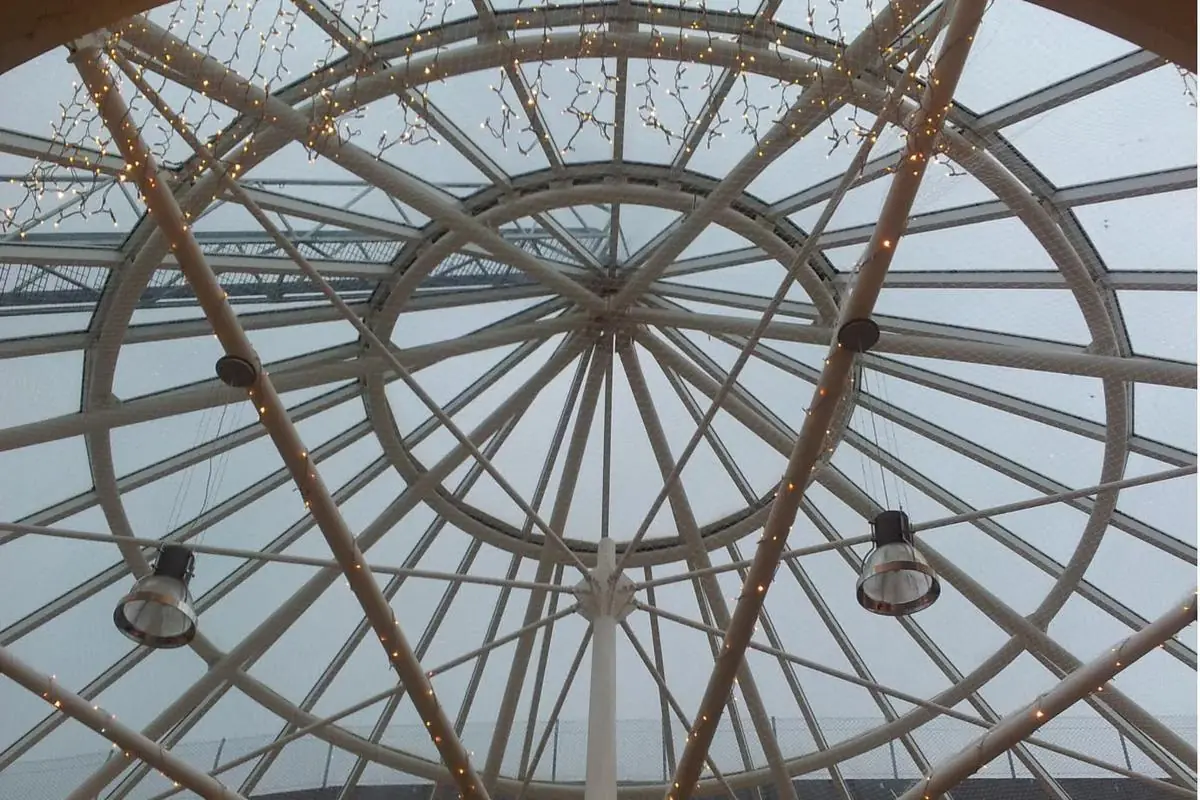
Glass Roof Leak Repair for Commercial Buildings
A leaking glass roof rarely leaks where the drip lands. We trace the path, make it safe, then reseal or reglaze it properly. For a live leak, our make-safe attendance target is within 4 hours of your call, subject to access and location.
ARRT Group is SafeContractor accredited and can offer an insurance-backed guarantee of up to 20 years on the work.
Glass roof leak repair: find the path, make safe, reseal
ARRT Group repairs leaking glass roofs on commercial buildings: pitched and sloped glazed roofs, atria, rooflights, roof lanterns, glazed canopies and heritage glass roofs. We find where the water is actually getting in, make the roof safe and weathertight, then carry out the permanent fix, whether that means resealing, regasketing, recapping or replacing the glass. Work is planned from our London HQ and our Midlands office in Radcliffe, Nottingham, with UK-wide programmes. Call 020 3780 3001.
Why glass roofs leak
A glass roof is a system, not a sheet of glass. Panes or sealed units sit on glazing bars and are held down by capping or pressure plates. Gaskets or sealant form the weather line, and gutters and flashings carry the water away at the edges. Water usually runs along a bar or across a soffit before it drips, so the stain on the floor is rarely under the defect. The causes we find most often are:
- Failed seals and gaskets. Rubber gaskets shrink, harden and pull back from the corners, and sealant joints lose their grip as the roof moves and weathers.
- Glazing bars and capping. Loose, lifted or missing capping, failed bar-end closures and blocked drainage channels inside the bars.
- Cracked or broken panes. Thermal stress, impact or a failed sealed unit lets water straight through and can quickly become a safety issue.
- Putty and lead on heritage roofs. On Victorian patent glazing, perished putty, cracked paint and lifted lead are the usual ways in.
- Gutters, flashings and abutments. Blocked valley gutters and failed upstands or flashings at walls and ridges overflow back under the glass.
- Condensation that looks like a leak. We check for it, so you do not pay to reseal a roof that is not leaking.
How we find and fix a leaking glass roof
Every job follows the same order: protect the space below, prove the entry path, make safe, then repair once. That keeps the atria, concourses, shops and offices under the roof open wherever possible.
- Close-quarters inspection. We get onto or under the roof by rope access, MEWP, tracked spider lift or internal access, photograph each bay and check the gaskets, capping, glass, gutters and flashings.
- Water testing where appropriate. If the path is not obvious, controlled water testing bay by bay isolates the joint that is letting water in. The tracing method is set out on glazing leak detection.
- Temporary make-safe. Where water is getting in or glass is cracked, we fit temporary seals, covers or boarding and set out exclusion zones below so the building can keep running.
- Permanent repair. This depends on what we find. We might reseal or regasket the affected bays, refix or renew the capping, clear and reseal the gutters and flashings, re-putty heritage panes, or replace cracked glass and failed sealed units.
- Record and handover. You get before-and-after photographs for FM, estates and insurers, plus a note of anything else we saw while we were at height.

Access without shutting the building
Most glass roofs sit over spaces that cannot close. We choose the access that disrupts least and costs the client least. That means rope access for sloped roofs, domes and lanterns, MEWPs and spider lifts for atria and canopies, and roof-top working with edge protection where the structure allows it. Scaffold is used only when it is genuinely the right answer. See glass replacement without scaffolding and rope access glazing.
Heritage glass roofs
We have carried out multiple projects over 10 years at Alexandra Palace, a Grade II listed London landmark, including external sealing to the three major glazed roofs. On the single glazed Victorian heritage glass roofs at Alexandra Palace, 194 glass panes were replaced on one roof and 112 × 7mm Georgian wired glass panes on another. Heritage roofs need care with historic bars, putty, lead and glass type. There is more on heritage glazing and the Alexandra Palace hub.
Is this the right page for your leak?
This page covers leaks through glass roofs: sloped and pitched glazing, atria, rooflights, lanterns and canopies. For leaks through curtain walling, windows or vertical glazed screens on occupied floors, see commercial glass leak repair. For the refurbishment of a whole atrium or rooflight, see atrium and rooflight glazing. If glass is broken and water is coming in now, go straight to emergency glazing make-safe or call 020 3780 3001.
What we deliver
- Close-quarters glass roof, atrium and rooflight leak inspection
- Water testing to prove the entry path where appropriate
- Temporary make-safe, covers and exclusion zones over occupied space
- Resealing, regasketing and capping renewal on affected bays
- Cracked pane and failed sealed unit replacement
- Heritage re-putty and lead work on Victorian patent glazing
- Photographic record for FM, estates and insurers
How the work is done
| Roof types | Sloped and pitched glass roofs, atria, rooflights, roof lanterns, glazed canopies, heritage glass roofs |
|---|---|
| Typical causes | Seals and gaskets, glazing bars and capping, cracked panes, heritage putty, gutters and flashings |
| Sequence | Protect below, inspect, test where needed, make-safe, permanent repair, record |
| Access methods | Rope access, MEWP, tracked spider lift, internal access with protection |
| Working hours | Daytime, out-of-hours and agreed service windows |
| Coverage | London HQ, Midlands office in Radcliffe, Nottingham, UK-wide programmes |
Questions we get asked
Can a leaking glass roof be repaired without replacing the glass?
Often, yes. Most glass roof leaks come from failed gaskets, sealant, capping or gutters rather than the glass itself. Once the entry path is proven we reseal or regasket the affected bays. Glass is replaced only where it is cracked or a sealed unit has failed.
How do you find where a glass roof is leaking?
We inspect at close quarters first, then use controlled water testing bay by bay where the path is not obvious. Water often travels along glazing bars before it drips, so we trace it back to the joint rather than resealing around the stain.
Is resealing a glass roof a permanent fix?
It can be, if the right bays are resealed with compatible materials and the underlying cause is dealt with too, such as blocked gutters or lifted capping. Blanket resealing over failed gaskets without a diagnosis tends not to last, which is why we prove the path first.
Can you repair a glass roof leak while the building stays open?
Yes. We set out exclusion zones and protection below, work from rope access, MEWP or spider lifts, and phase the work around trading hours, so atria, shops and offices can stay open.
Do you repair heritage and Victorian glass roofs?
Yes, including single glazed Victorian heritage glass roofs on a Grade II listed London landmark. Heritage roofs need putty, lead and glass-type decisions that respect the original fabric. See our heritage glazing page.
Stop it happening next winter
Most leaks and failed seals we are called to in winter began as small defects that could have been found earlier. A planned maintenance visit checks seals, gaskets and drainage at height, logs developing defects with photographs and gives you a costed schedule, so the repair budget is planned rather than reactive.
Often needed alongside this
Leak Detection & Water Testing
Prove the entry path before anything is resealed: close-quarters tracing and controlled water testing.
View service 02Atrium & Rooflight Glazing
Overhead glazing repaired and refurbished over live public space, with the temporary works it needs.
View service 03Rope Access Glazing
Glass, gasket and sealant work on ropes for domes, lanterns and sloped roofs.
View service
Water coming through a glass roof?
Call 020 3780 3001. Our make-safe attendance target is within 4 hours of your call, subject to access and location; we will confirm timing for your site on the phone. Or use the short form and we will call you back.